
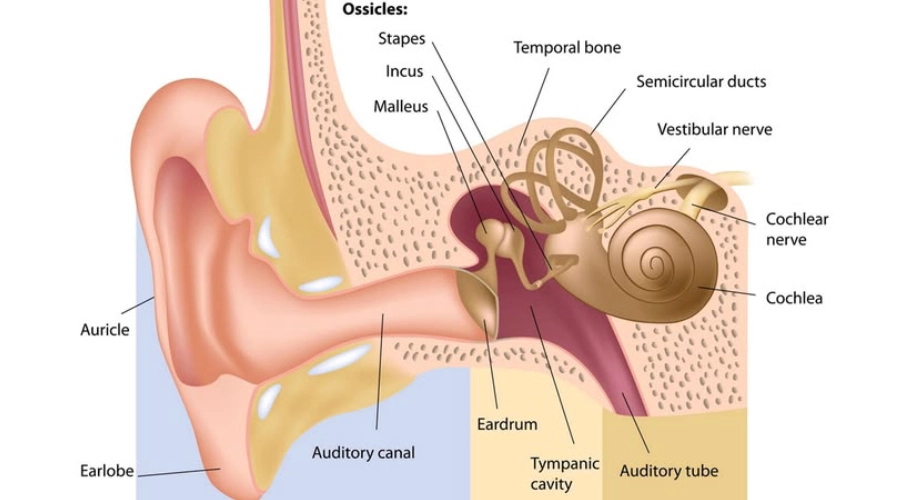
What is stapedectomy or Stapedotomy?
Stapedotomy is a modified stapes operation. The stapes is the smallest bone in the human body. The stapes bone is present in the middle ear and is responsible for the transmission of sound waves. When this bone gets damaged or fixed, it leads to hearing loss. Middle ear infections, congenital malformations, or osteosclerosis cause damage to or fixation of the stapes bone in the middle ear.
Stapedectomy is performed to surgically remove the damaged or fixed stapes bone in the middle ear. In the place of this bone, a micro-implant is implanted to restore normal hearing function.
The following are the indications of the Stapes Bone:
- Middle Ear Infections
- Conductive Hearing Loss
- Ostosclerosis (Abnormal mineralization of stapes bone)
- Fixated Stapes Bone
What is the Procedure for Stapedotomy?
- In stapedotomy, a tiny hole is drilled in the stapes footplate.
- The hole is drilled in the stapes footplate either using a micro drill or with a laser, and a prosthesis is then fixed to touch this area (oval window).
- Hence, stapedotomy is also referred to as “Touch surgery.” This procedure is improved by using a tissue graft seal.
- In short, in the stapedotomy operation, a part of the stapes bone is removed and replaced with an artificial piston.
Difference between Stapedotomy and Stapedectomy:
- In stapedotomy, a small opening/hole is drilled within the stapes bone (accomplished via laser or manually with a drill). Whereas Total or subtotal removal of the stapes footplate (usually performed manually) is referred to as “stapedectomy.”
- Stapedotomy is preferred over stapedectomy.
- Because Stapedotomy simple and safer and has fewer complications compared to stapedectomy.
What are the Conditions in which Stapedotomy is Indicated?
Otosclerosis: In Otosclerosis, conductive hearing loss occurs due to fixation of the stapes bone. Stapedotomy helps in the reversal of conductive hearing loss.
What to Expect after Stapedotomy?
- In the first 24 hours following stapedotomy surgery, you should be very still or perform little movements.
- Try to avoid sudden movements when you turn your head, roll over, or get up.
- Your hearing will fade during the first few weeks after your surgery because of the blood clot that forms in your ear canal. As the clot shrinks, your hearing will gradually improve.
- Do not lie on your operated ear.
- Do not blow your nose vigorously.
- Keep your mouth open while coughing and sneezing to reduce pressure on the ear.
- The doctor prescribes you ear drops, and the doctor will instruct you on how often you should use those ear drops.
- Following surgery, you may have some drainage (bloody in color) from your operated ear. Drainage should stop after approximately three days.
- If drainage persists even after three days following surgery, call your ENT doctor.
- After surgery, you may develop a metallic taste. It will probably return to normal, but may take a few months to do so completely.
- Absolutely cannot get water in the ear. No showering until a postoperative check-up.
- To avoid water in the ears: apply Vaseline jelly on a cotton ball and place Vaseline side in the ear (this creates a water barrier)
- Avoid lifting weights over 5 lbs for at least two weeks.
- Visit the ENT clinic one week after surgery for a postoperative check-up.
What are the advantages of Stapedectomy?
- There is an overall improvement in the hearing function of the ear. The patient can hear normally without taking any help or assistance by wearing any hearing assist devices after the surgery.
- Many otolaryngologists consider this procedure to be safer with zero percentage of post-surgical complications.